
Allopregnanolone (AP) ELISA Kit: A Comprehensive Overview
The Allopregnanolone (AP) ELISA Kit is an essential tool used in research to detect and quantify the neurosteroid allopregnanolone, which plays a critical role in modulating the GABAergic system. This steroid has significant implications in various neurological and psychiatric conditions, making its measurement crucial in clinical and research settings.
Key Features of the Allopregnanolone ELISA Kit
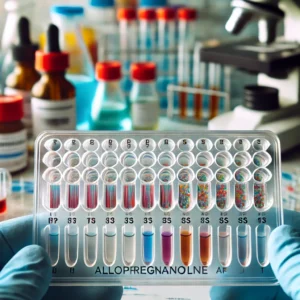
- High Sensitivity: The kit provides highly sensitive and specific detection of allopregnanolone in biological samples like serum, plasma, and cerebrospinal fluid. This sensitivity makes it an ideal tool for both basic research and clinical diagnostics, as supported by studies available on PubMed.
- Quantitative Accuracy: Using enzyme-linked immunosorbent assay technology, the kit offers precise quantitative measurements, which are essential for understanding fluctuations in allopregnanolone levels under various physiological and pathological conditions. Its accuracy has been validated in government-funded research, such as studies available on the NIH platform.
- Wide Range of Applications: The AP ELISA Kit is widely used in the fields of neuroscience, endocrinology, and psychiatry. It has been used in studies funded by the National Science Foundation (NSF) to investigate its role in mood disorders and neurodegenerative diseases like Alzheimer’s and Parkinson’s diseases.
Mechanism of Action
Allopregnanolone is synthesized from progesterone and acts as a potent positive allosteric modulator of GABA-A receptors. By enhancing GABAergic neurotransmission, it exhibits anxiolytic, sedative, and neuroprotective effects. The ability to measure this neurosteroid using the AP ELISA Kit helps scientists explore its involvement in various psychiatric and neurological disorders, as discussed in research published by the National Institutes of Health (NIH).
Studies show that decreased levels of allopregnanolone are linked to anxiety and depression, particularly in postpartum women and individuals with post-traumatic stress disorder (PTSD) (NIH). Moreover, allopregnanolone has been studied in the context of neurodegenerative diseases, particularly in research exploring its neuroregenerative potential, such as that conducted by universities funded by the National Institute on Aging (NIA).
Applications in Research
- Anxiety and Depression: Allopregnanolone levels are significantly correlated with mental health conditions. Studies funded by the National Institute of Mental Health (NIMH) have shown that reduced levels of this neurosteroid are associated with depression, especially in women suffering from postpartum depression.
- Alzheimer’s Disease: Emerging research indicates that allopregnanolone might stimulate the regeneration of brain cells, offering hope as a treatment for neurodegenerative diseases such as Alzheimer’s. Clinical trials supported by the NIH are exploring this potential.
- Parkinson’s Disease: As a neuroprotective agent, allopregnanolone is being investigated for its ability to slow the progression of Parkinson’s disease. The NIH and other government bodies have funded significant research into how neurosteroids might protect neurons from degeneration.
- Reproductive Health: Since allopregnanolone is a derivative of progesterone, researchers use the AP ELISA Kit to study its role in reproductive health and hormone regulation. Studies from institutions like PubMed Central suggest its involvement in conditions such as polycystic ovary syndrome (PCOS) and menstrual cycle irregularities.
ELISA Procedure and Workflow

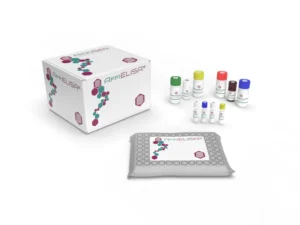
The Allopregnanolone ELISA Kit uses a sandwich ELISA format, where allopregnanolone in the sample binds to antibodies in a wehttps://www.affielisa.com/shop/afg-ddp-1343-affielisa-r-general-allopregnanolone-ap-elisa-kit-20044ll plate. The procedure includes:
- Sample Preparation: Biological samples such as plasma, serum, or cerebrospinal fluid are diluted and processed for analysis, as outlined in protocols from the National Institute of Standards and Technology (NIST).
- Antibody Binding: The allopregnanolone in the samples binds to specific antibodies coated on the well plate, which are designed to capture this neurosteroid.
- Enzyme Conjugation: A secondary antibody conjugated with an enzyme is added to form a complex with the captured allopregnanolone, which is further supported by NIH-funded resources.
- Substrate Reaction: A substrate is added to the well, triggering a colorimetric reaction proportional to the amount of allopregnanolone present in the sample. This allows for the quantification of allopregnanolone based on the intensity of the color change, a method extensively used in labs worldwide, including those at Johns Hopkins University.
Advantages of the Allopregnanolone ELISA Kit
- High Throughput: The ability to run multiple samples simultaneously makes this kit valuable for high-throughput research environments, such as those seen in government research labs like the Centers for Disease Control and Prevention (CDC).
- Versatility: The kit can be applied in both clinical settings and basic research, as it detects allopregnanolone in different biological samples, including serum, plasma, and cerebrospinal fluid, making it suitable for a variety of studies from PubMed Central.
- Cost-Effective: Compared to more complex techniques such as mass spectrometry, the AP ELISA Kit is a more cost-effective option for neurosteroid quantification, making it accessible for research funded by smaller grants through organizations like the NSF.
Conclusion
The Allopregnanolone (AP) ELISA Kit plays a critical role in advancing research into neurosteroids. Its high sensitivity, precision, and wide range of applications make it an invaluable tool for studying the role of allopregnanolone in mental health, neurodegenerative diseases, and reproductive health. The kit’s versatility, along with its use in both research and clinical diagnostics, makes it indispensable for advancing our understanding of this essential neurosteroid.